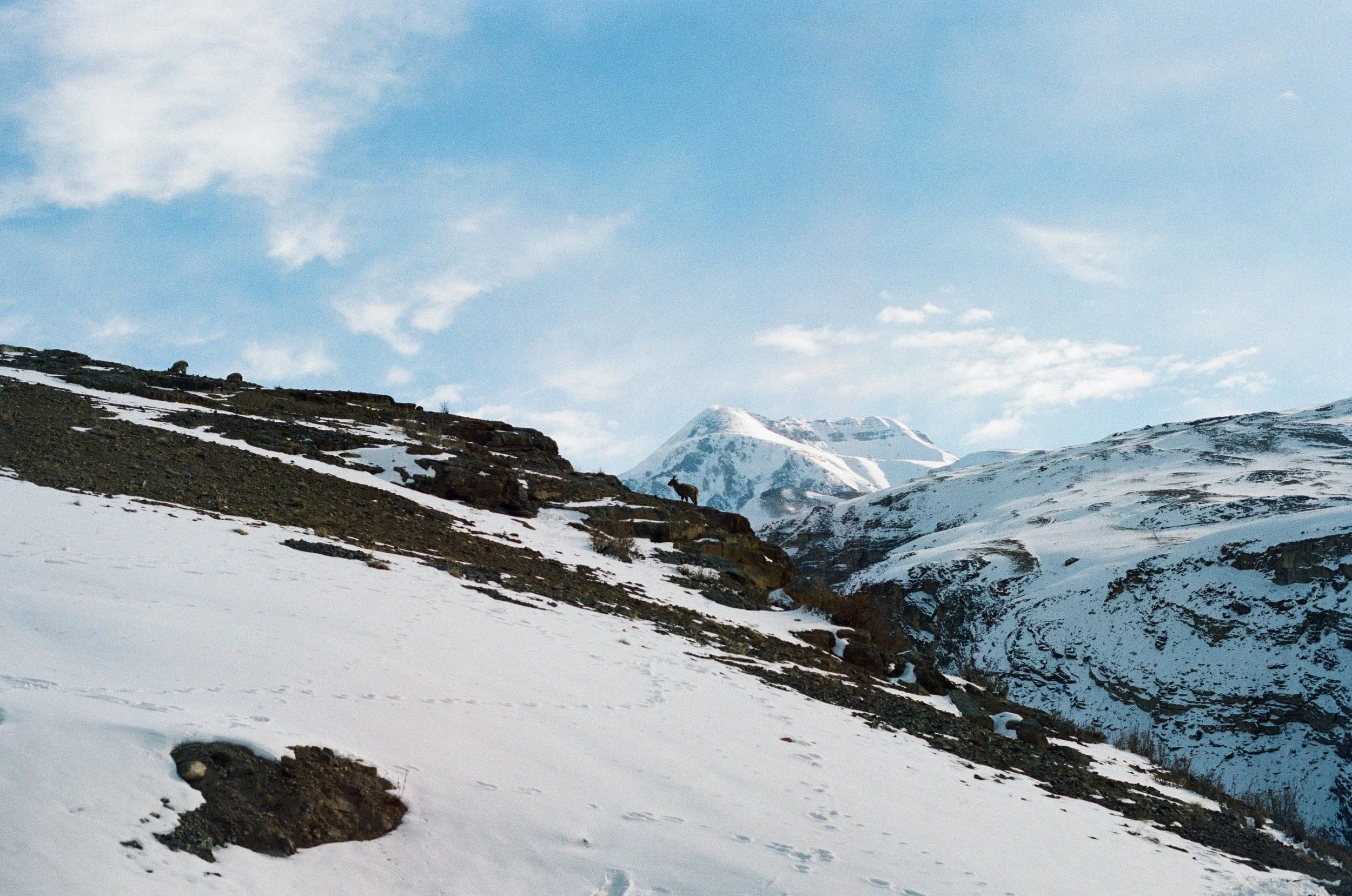
Spiti Valley Feb 2024
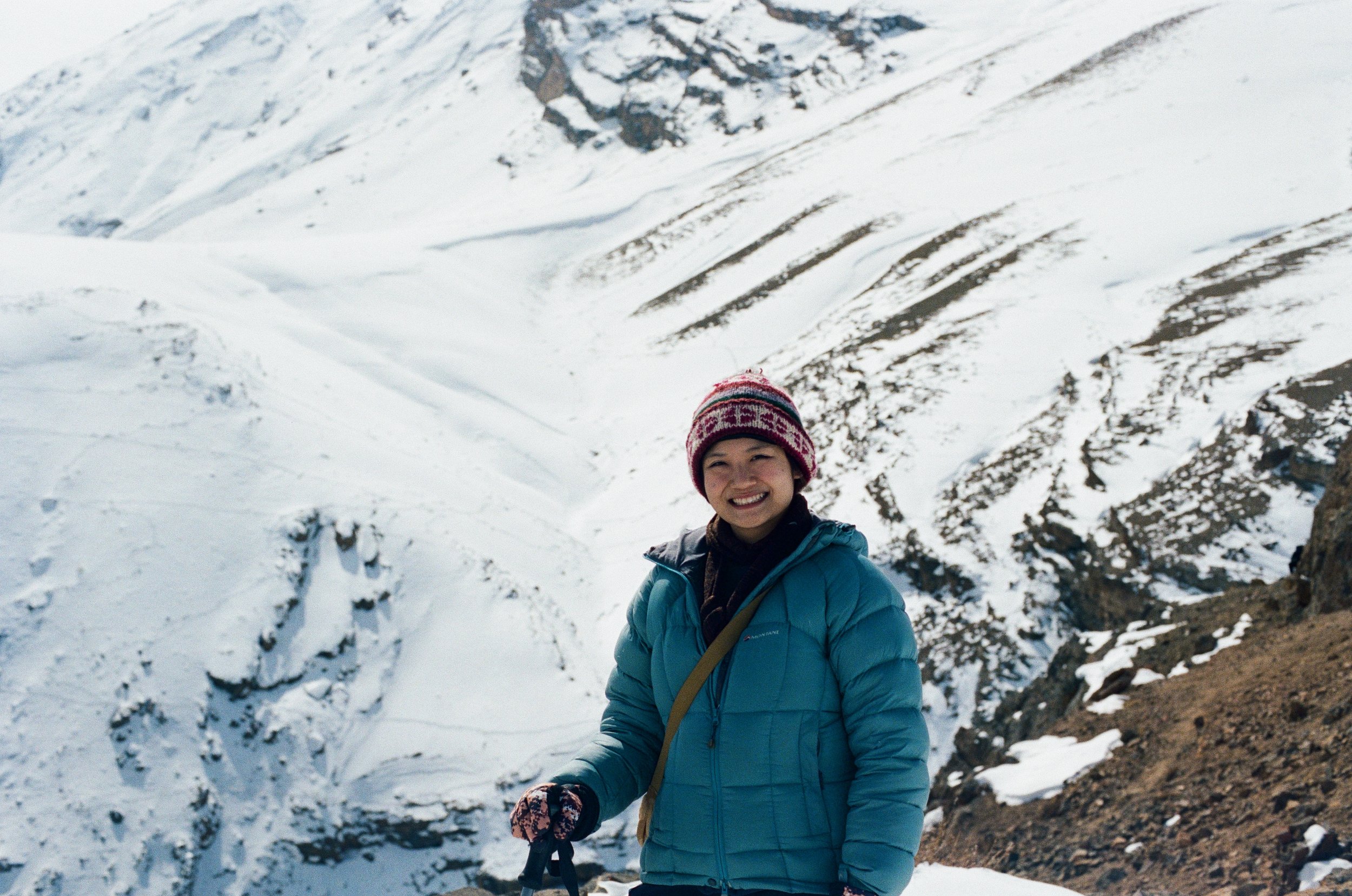
February 2024 — together with a group of 4, we headed deep into Spiti valley, a cold desert landscape located at an altitude of 4,500m. A journey that took us four days.
The name “Spiti” means “The Middle Land”, referring to this area located between Tibet and India, comprising of small communities whose ancestors were originally from the Tibetan plateau and spoke a language called “Spitian” that closely resembled the Tibetan language.
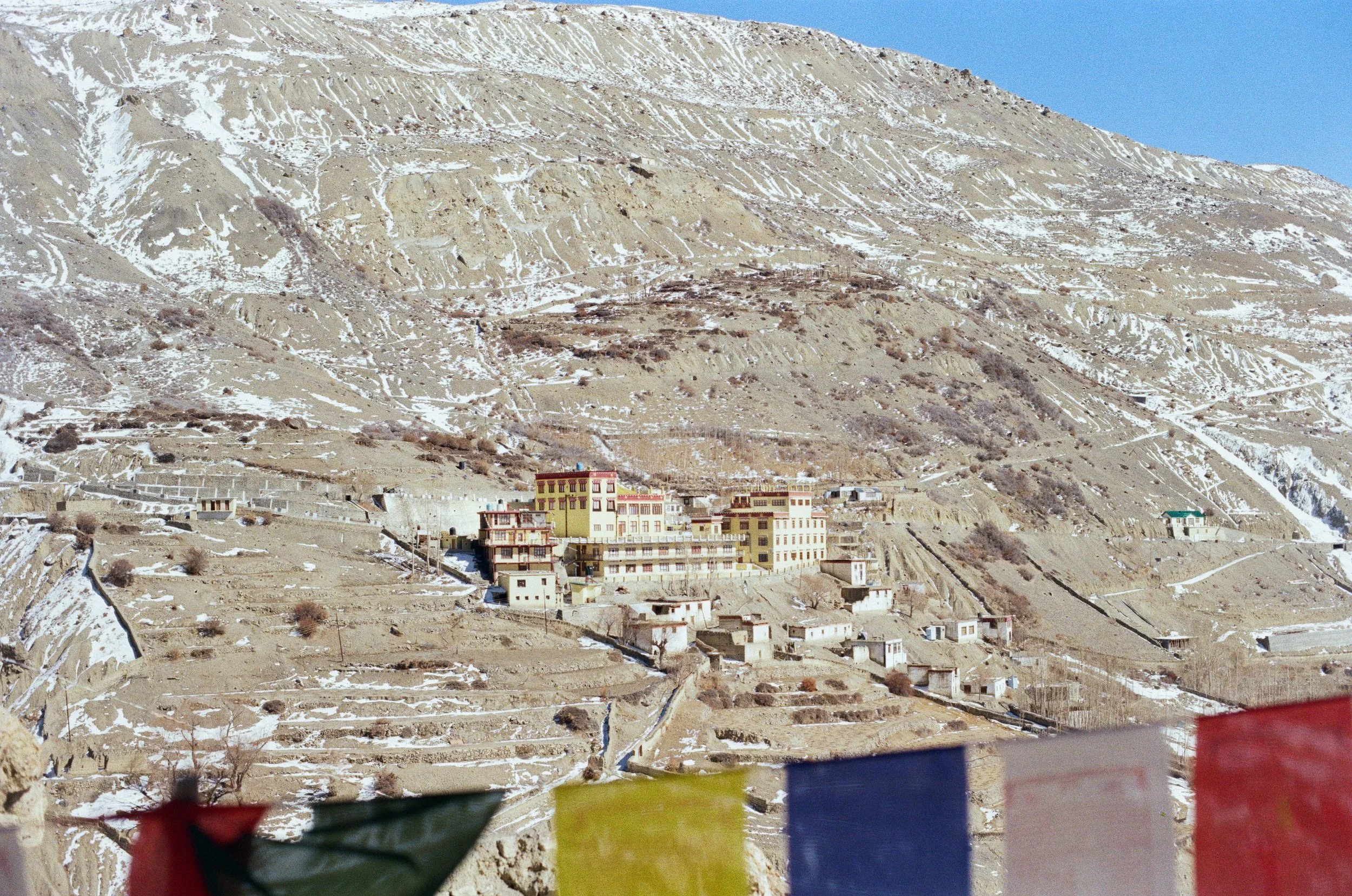
February 2024 — together with a group of 4, we headed deep into Spiti valley, a cold desert landscape located at an altitude of 4,500m. The name “Spiti” means “The Middle Land”, referring to this area located between Tibet and India, comprising of small communities whose ancestors were originally from the Tibetan plateau and spoke a language called “Spitian” that closely resembled the Tibetan language.

It took us 4 days to arrive at the valley — a flight into Delhi, a connecting flight to Chandigardh, a 4 hour car ride (or 5 hours train ride) to Shimla, and then two full-days driving into the valley. I saw how landscapes changed from the hill station town of Shimla, where Himalayan pine trees lined the roads, to more arid landscape, narrower valleys, hydropower dam constructions, and eventually snow capped mountain peaking through the valley and giant rocks with their edges cut by the wind.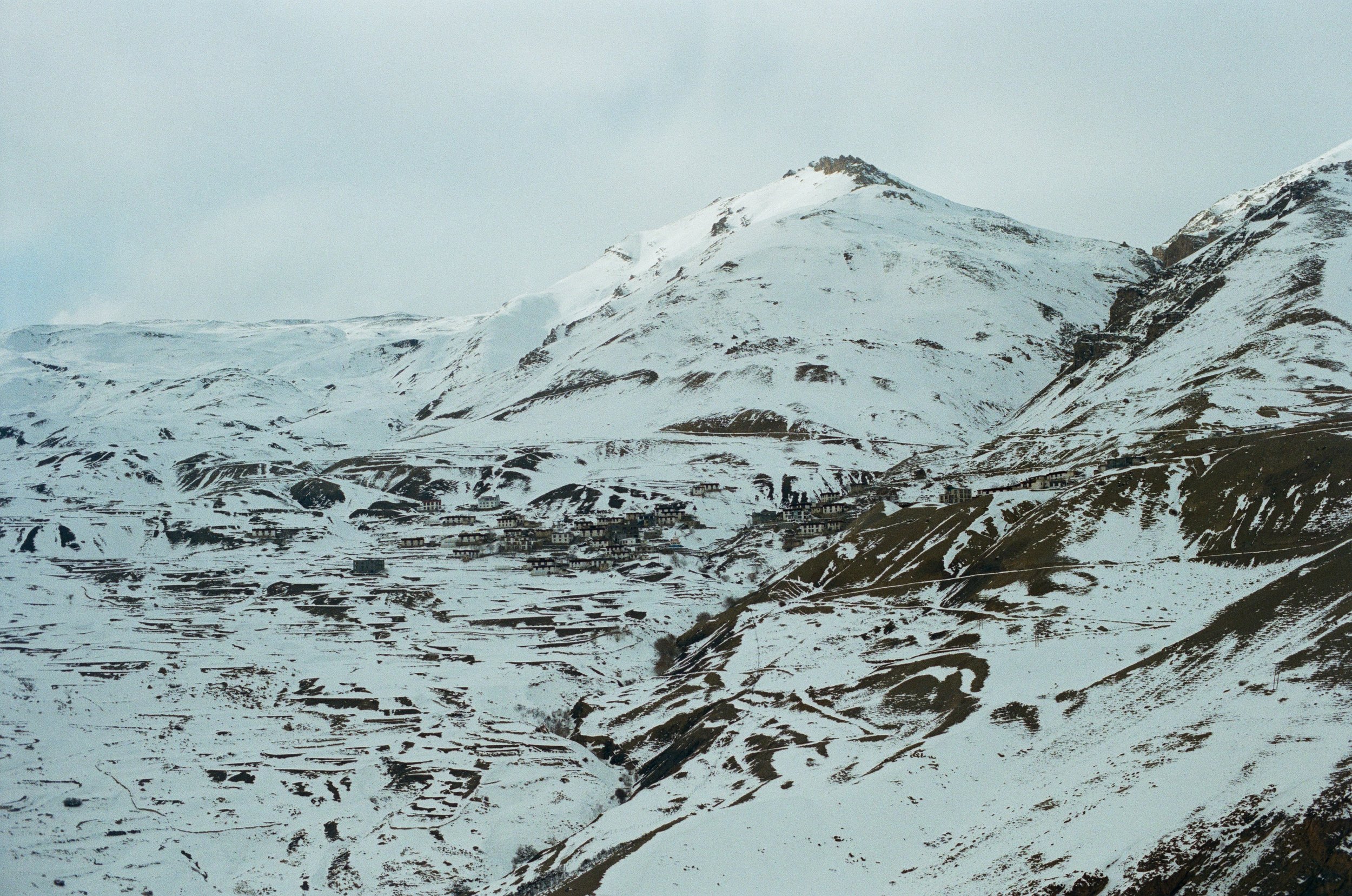
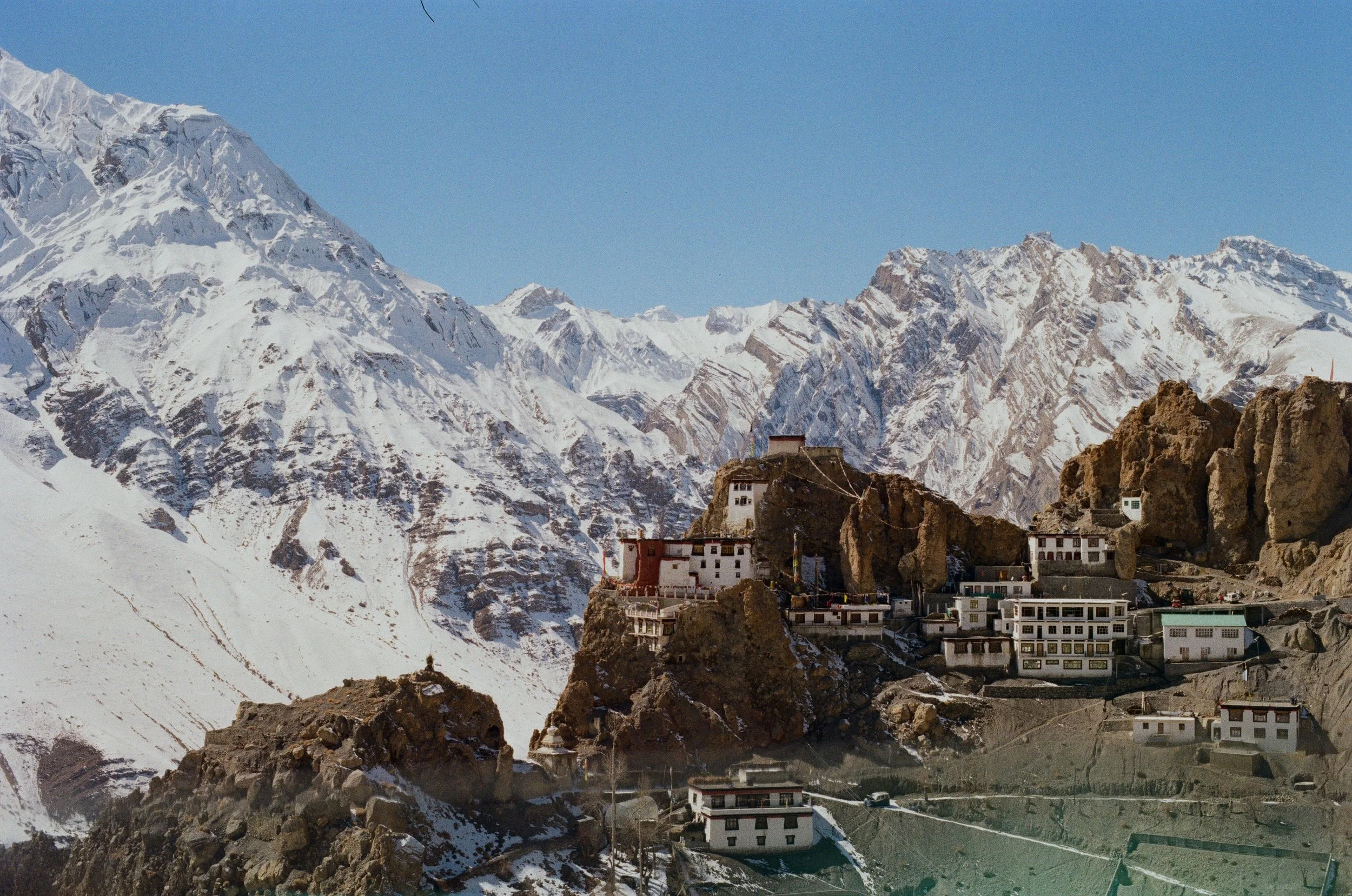
Chicham village from a distance — after two days on route, we finally arrived. 4,500m altitude. This was taken from the road across, we were subsequently going to drive through winding and snow-filled narrow routes, help another car to get itself out of the snow, before reaching the village.
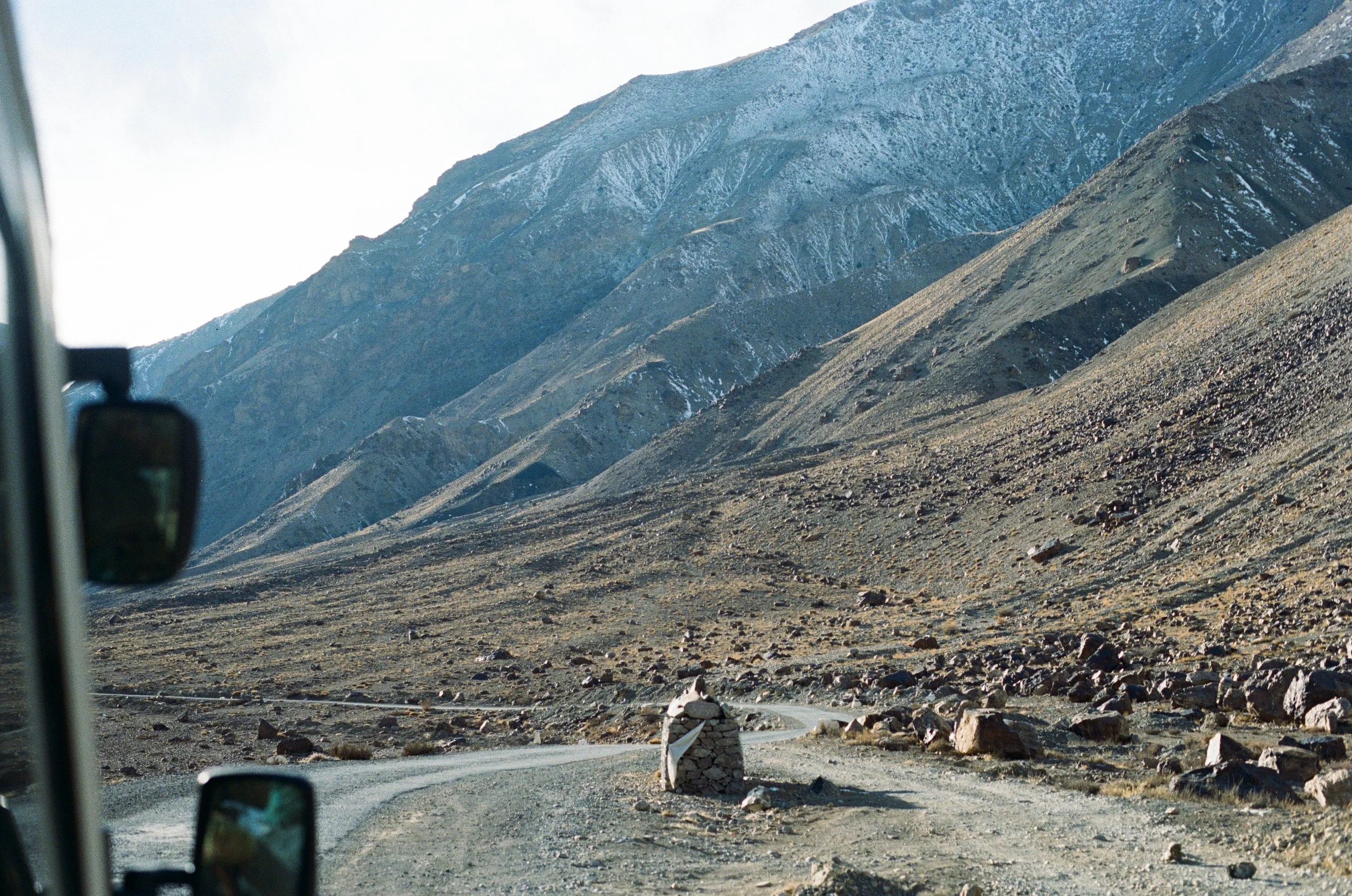
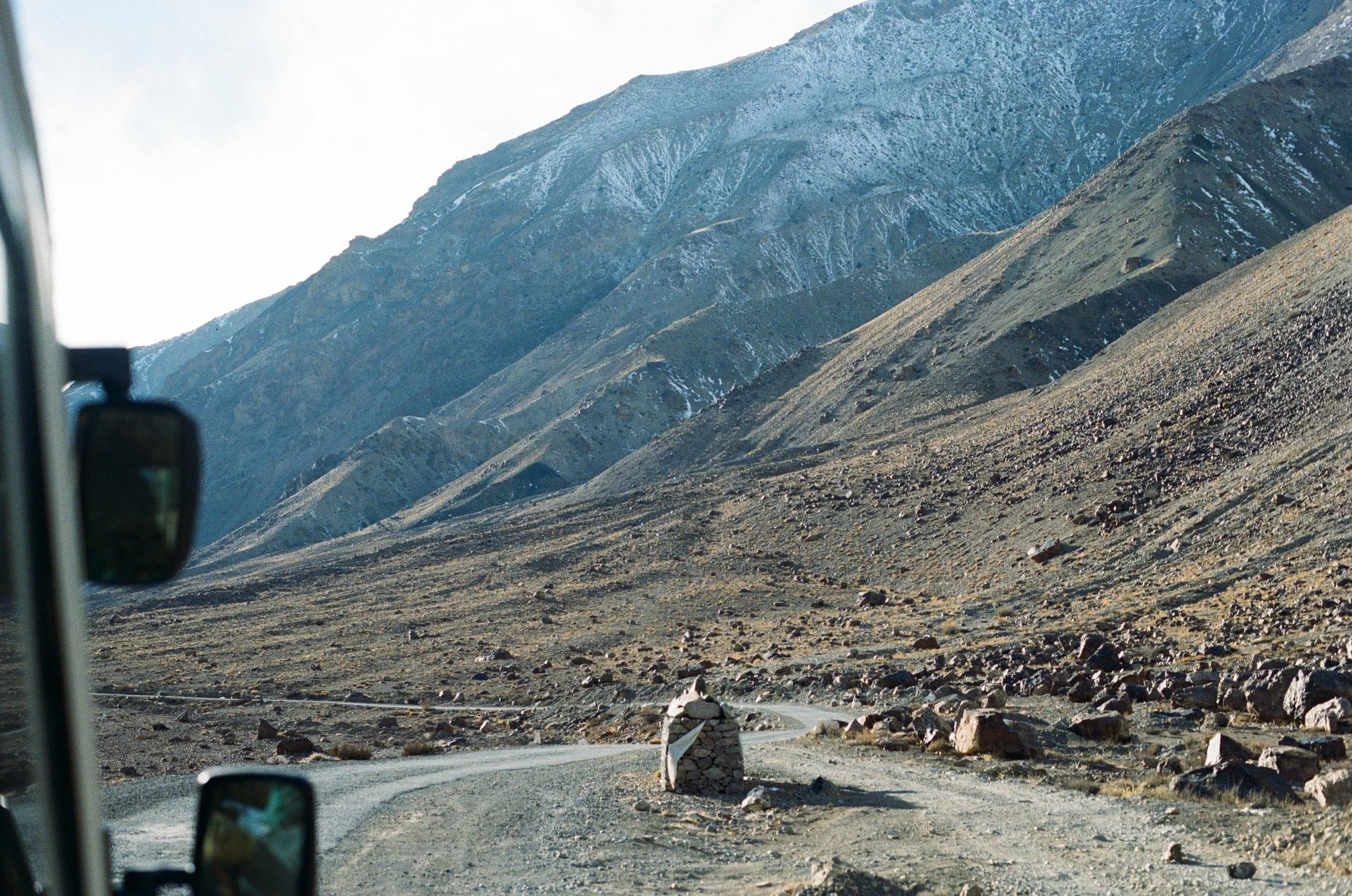
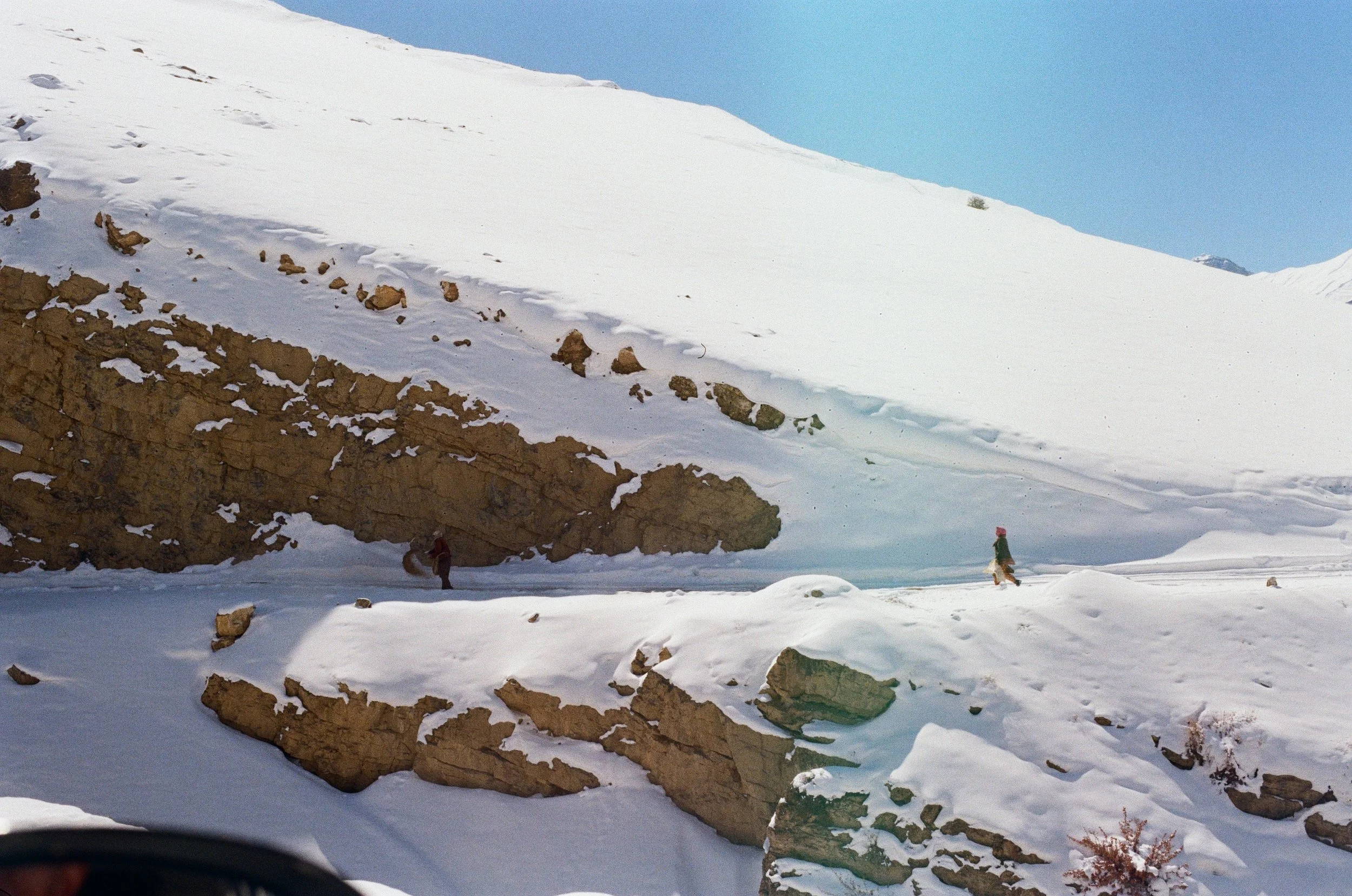
This is one of my favourite pictures from the trip. Something about this photo — the open road, the way light hits the prayer boulder which cars have to drive clockwise around, the adrenaline of sticking my head out to get this shot - reminds me of the feeling of being a part of this world.
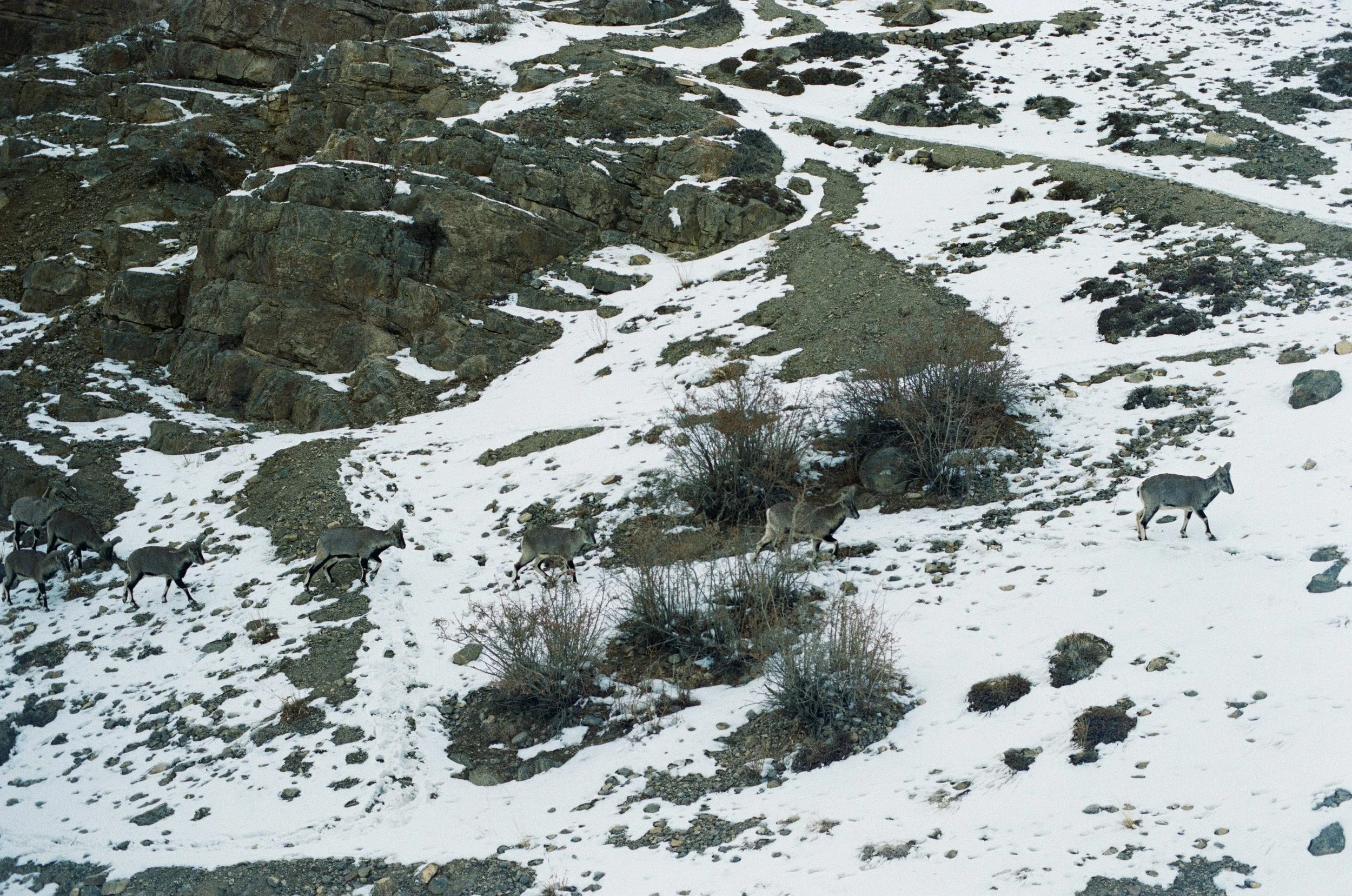
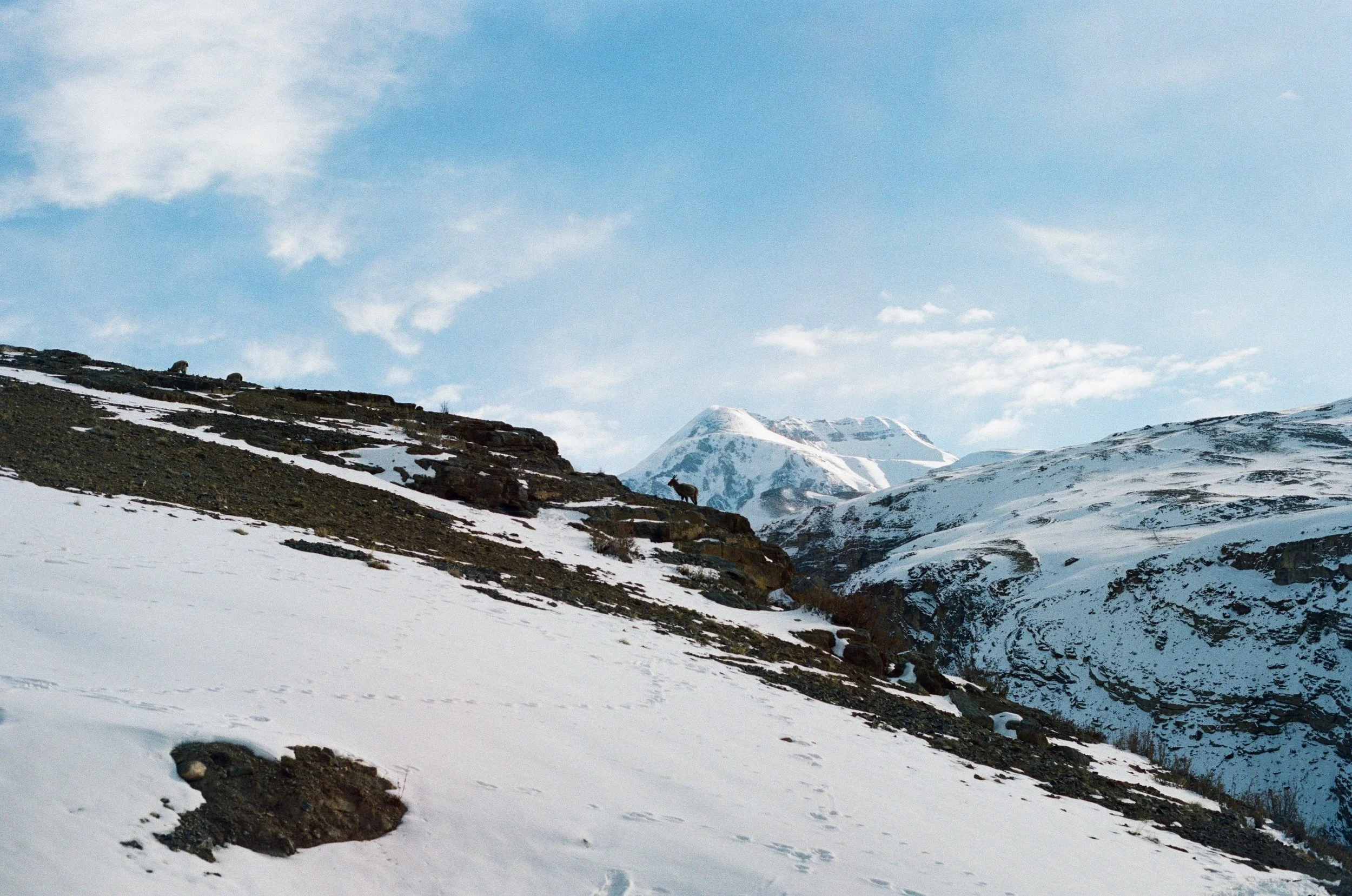
At Spiti valley, life seems tough for the locals who live and depend on the environment, with an annual rainfall of only 50mm (tropics have 2000mm of rainfall), nothing grows for most parts of the year. Green peas and root vegetables like potatoes, barley are planted, harvested and preserved, but for other parts of the year, the community depended on wildlife ecotourism as their main source of income. This year snow arrived late and little. Just a few days before we arrived, the village had its first snow of the season to the relief of everyone who had gathered from nearby villages to pray for snow. In this community, I witnessed the human spirit which inspired me — in the face of hardship it remains resilient and indomitable, as it is compassionate and loving. These two ideals are not mutually exclusive I learned. 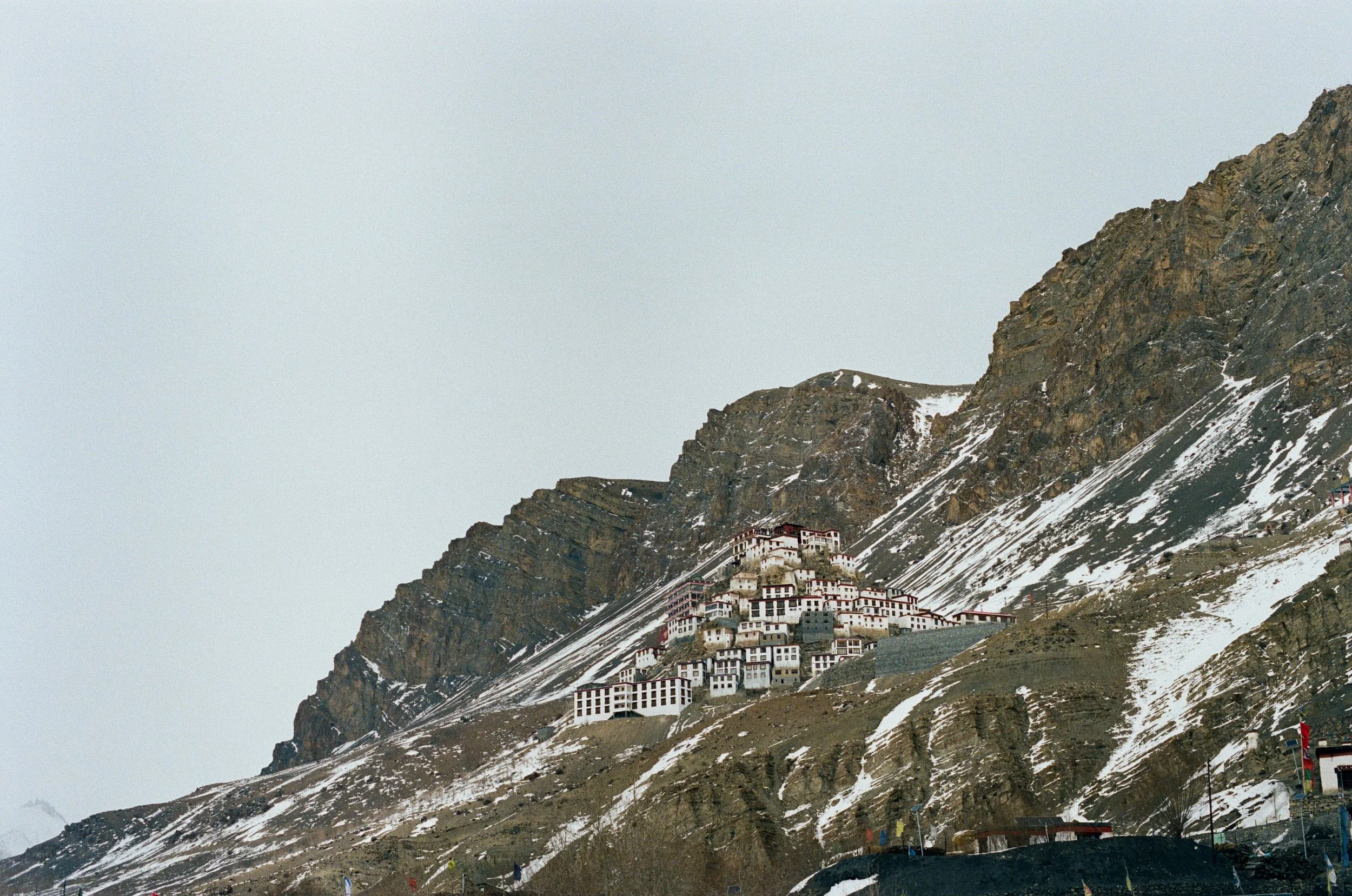
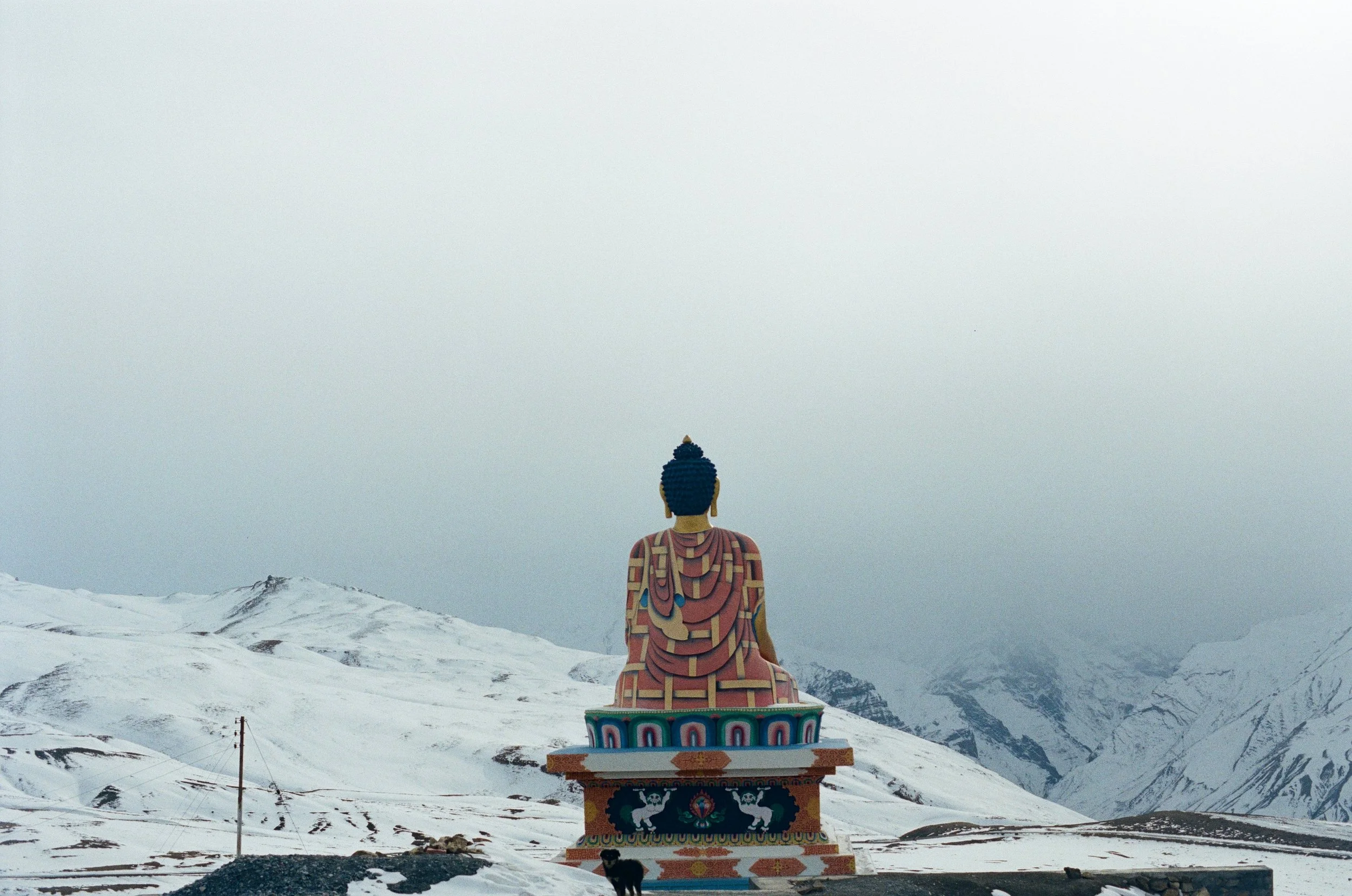
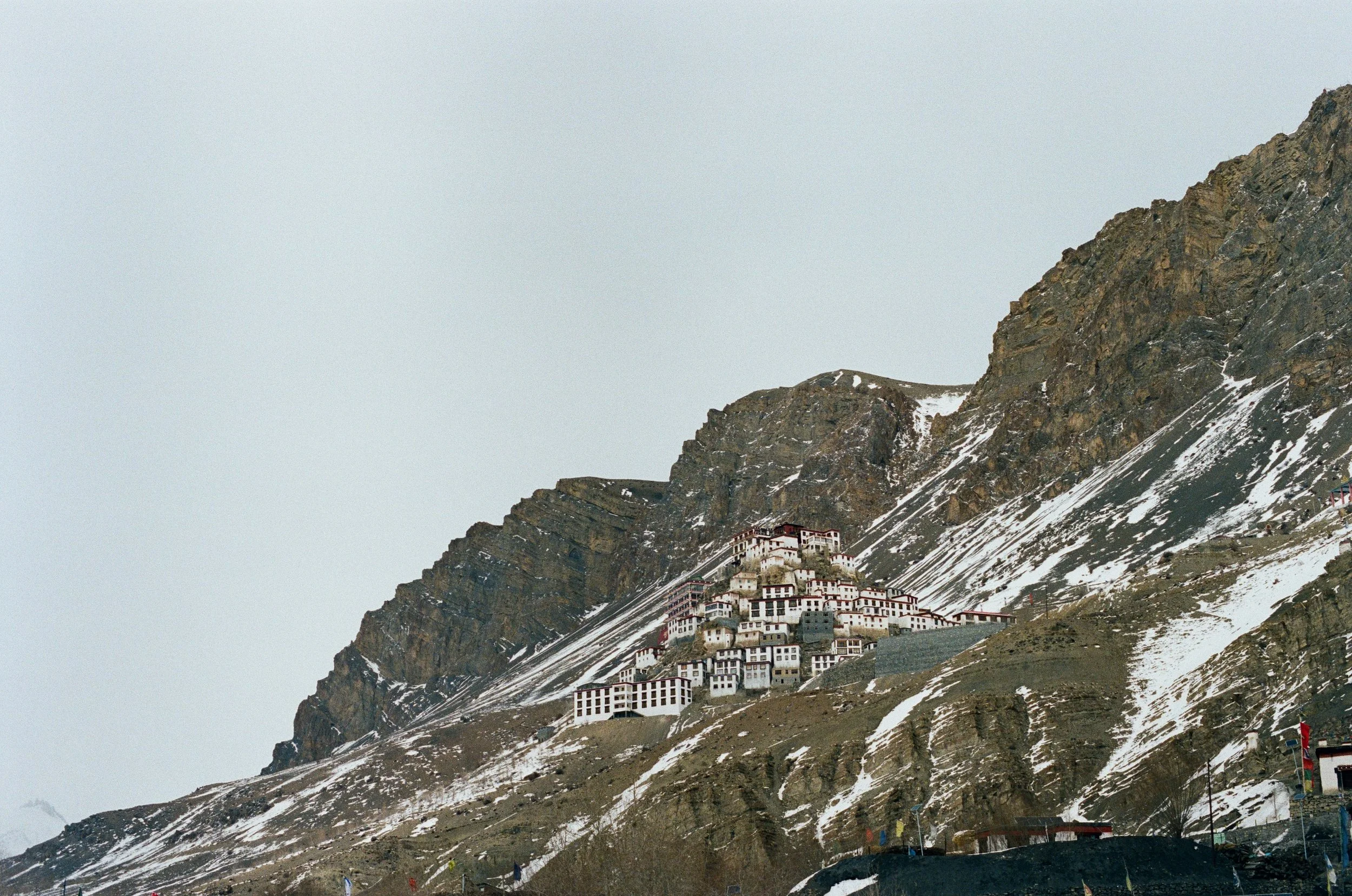
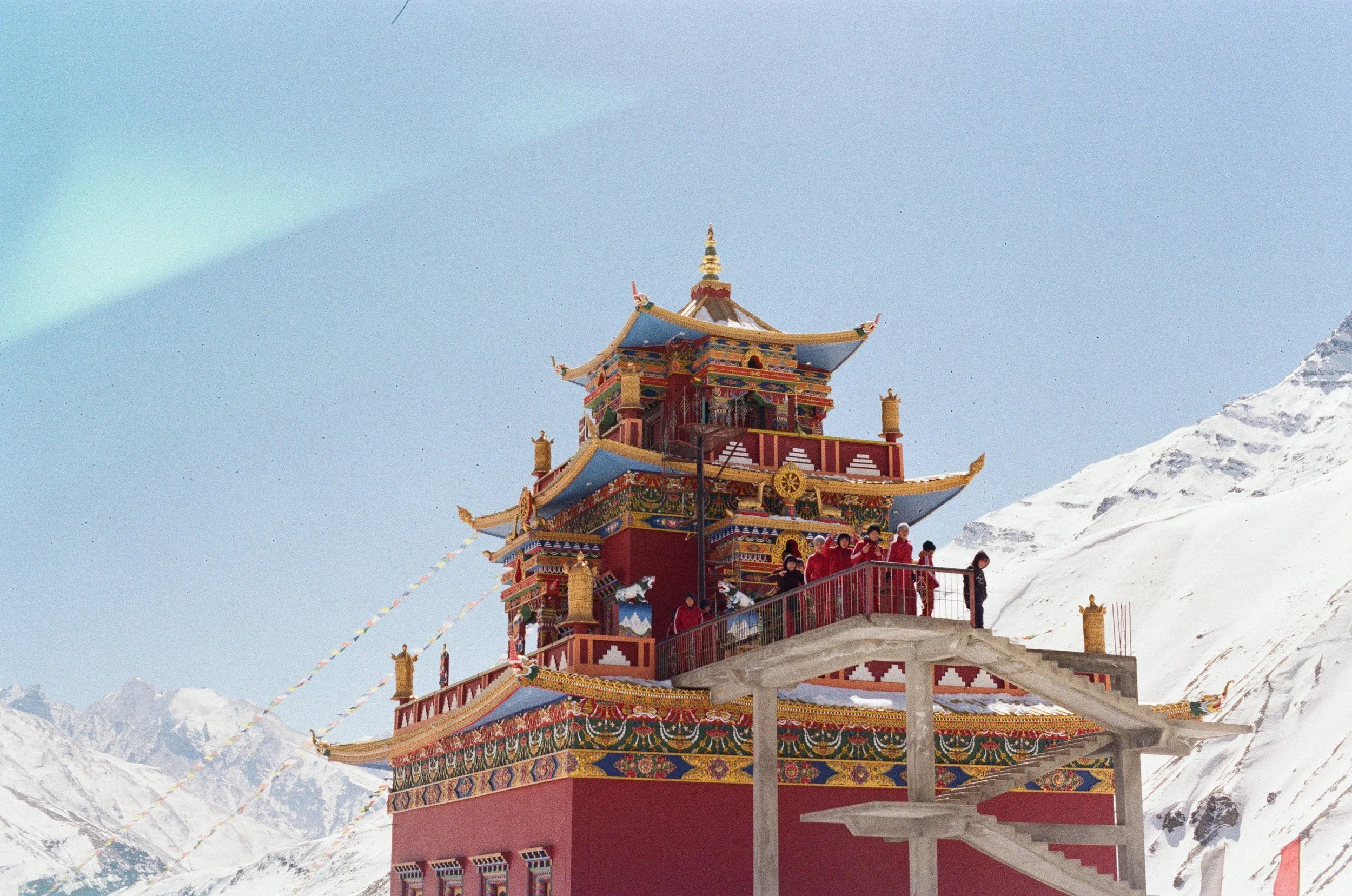
Kee Gompa, an iconic buddhist monastery in Kaza, where monks young and old still reside.
What do locals do in winter? Men engage in local businesses revolving around tourism — they might run a car mechanic shop, others have their own guiding/tourism business, some might be drivers, cooks. Women took care of affairs in the house: manage the livestock usually living together with them in the same house (fed them, collected their poo as fuel for the furnace), participated in prayer events at the local gompa, volunteered to care for neighbours’ kids.They were always busying themselves with work. Evenings were gathered around the furnace in our guide’s Takpa homestay, a traditional mudhouse that is owned by most Spitians.Mud houses retain heat much better than cement houses. Uncle Phuntsok (our chef and Takpa’s relative) made us generous servings of Yak soup, a delicacy eaten during winter to warm the body.It was probably that, the mudhouse, the conversations, the furnace — evenings in Chicham were always filled with warmth and easefulness.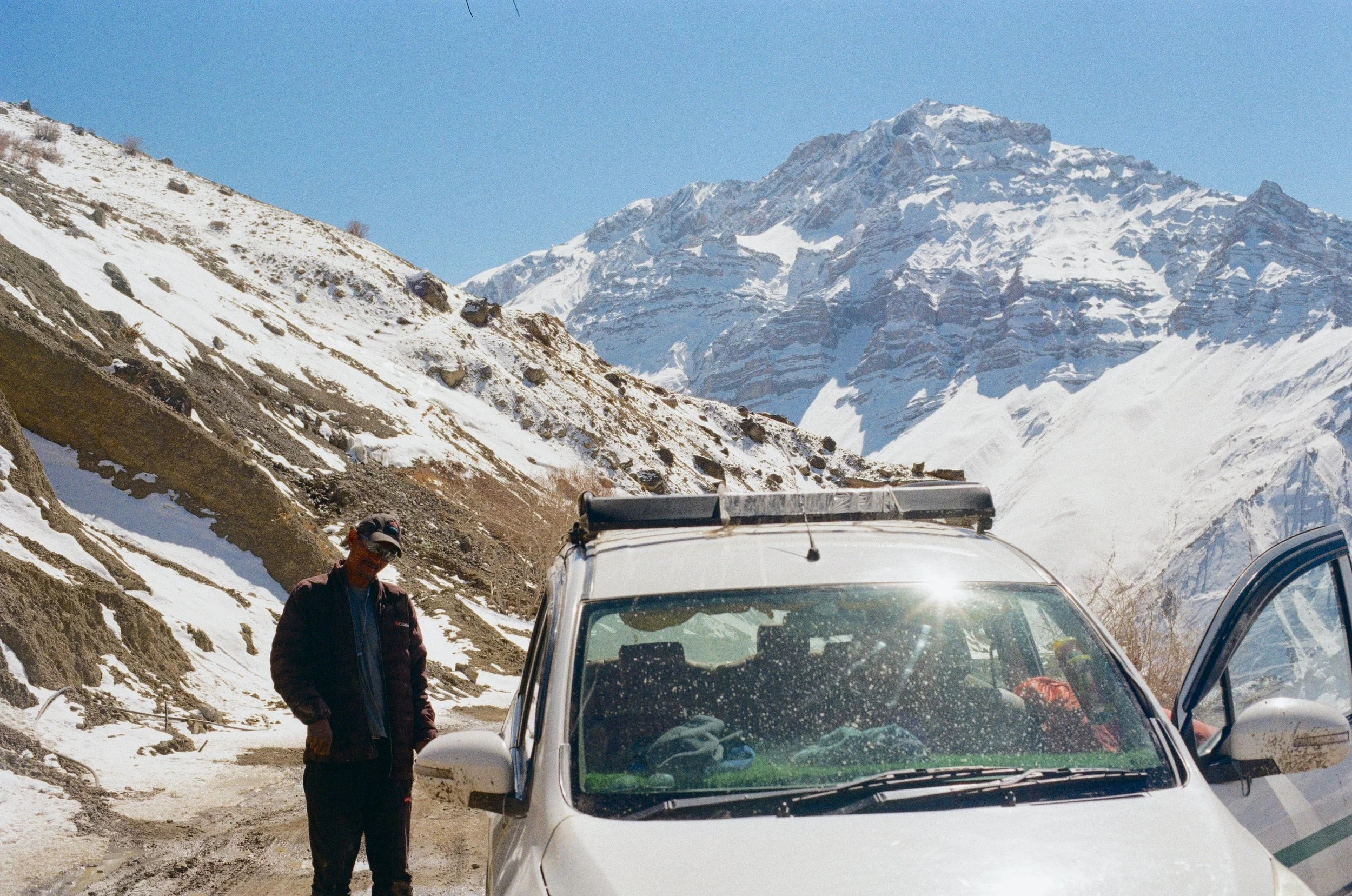
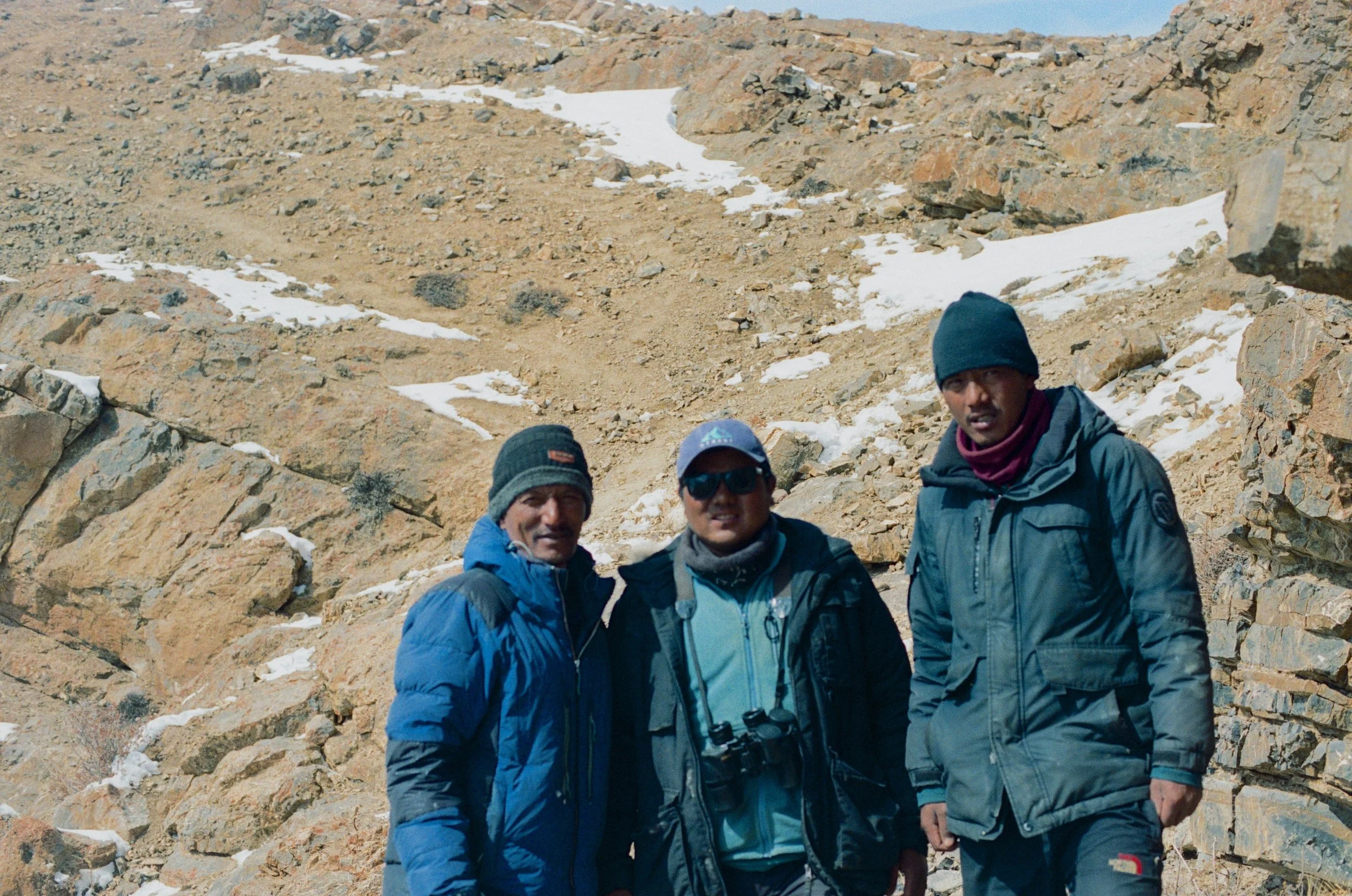
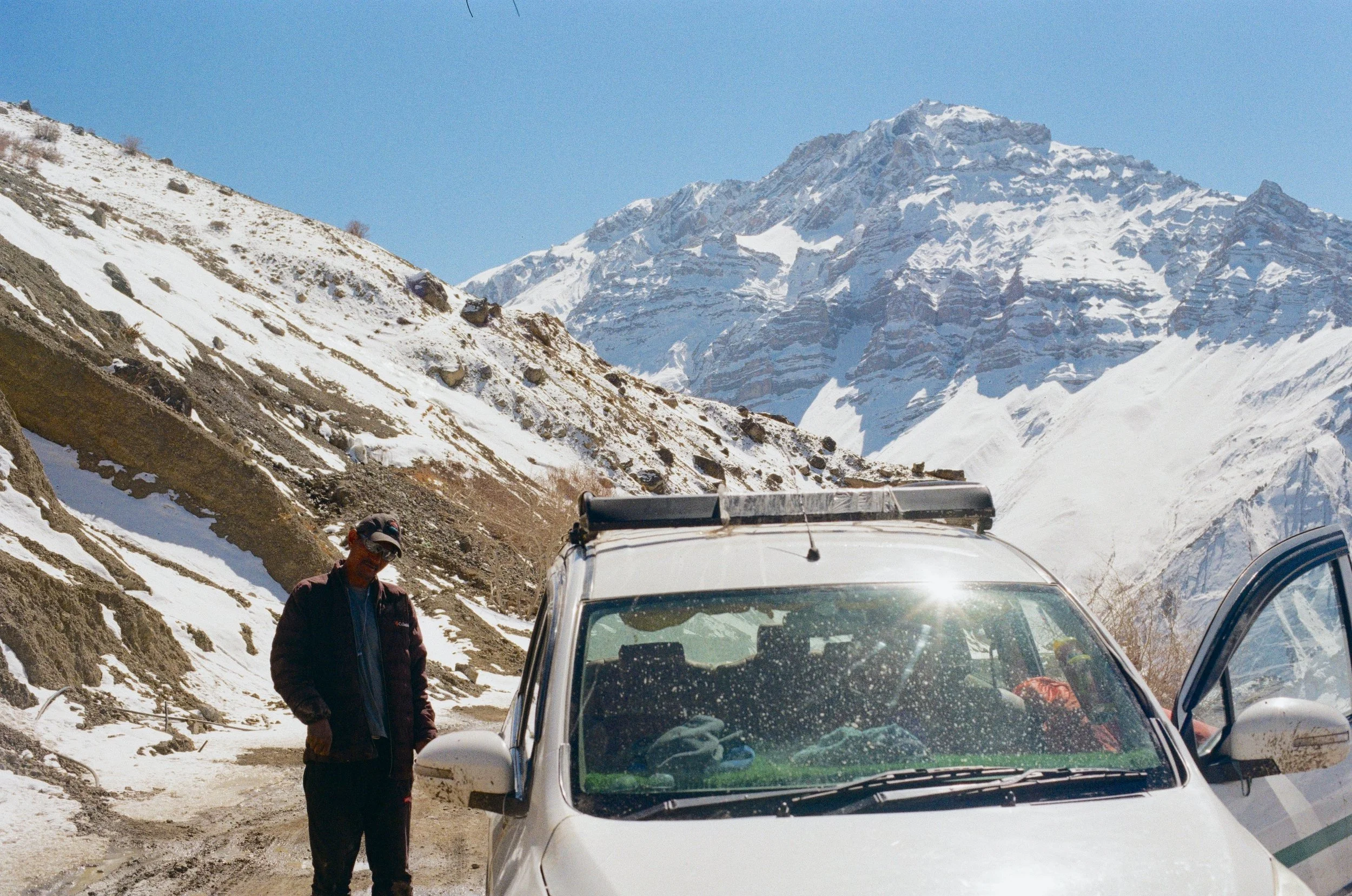
Takpa-ji — our guide, driver, cook, snow leopard guardian, self-made entrepreneur, basically an all-in-one renaissance man. He has three daughters who are schooling in the state. We got chatting and asked him what he would do if he had a million dollars, one of those cliche questions, he said he wanted to build a library in the village where kids could come to read and learn.
I like how the family prioritises helping each other out. Our guide Takpa was busy with our group, so his brother volunteered to drive his daughter back to boarding school in Dharamshala, a four-day roundtrip. Random strangers helping each other to get their cars out, to shovel the snow, group cooperative making handicraft and splitting the profits, everyone like a brother or a sister. The sharing economy makes me believe in an alternative way of life and reflect upon my own— how far and embedded in capitalism have our lives become that everything seems transactional. Perhaps prompted by the environment to share and look out for each other?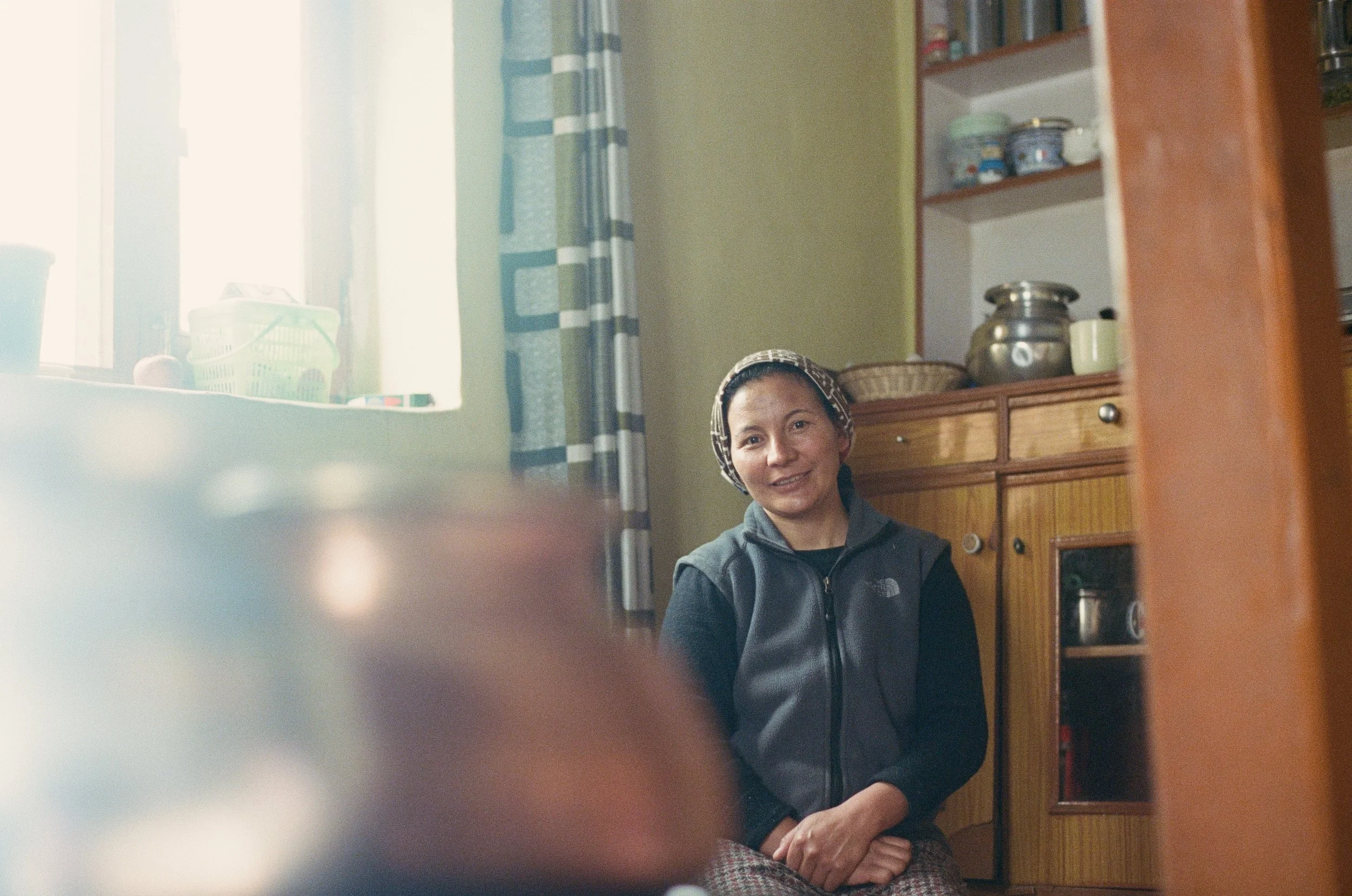
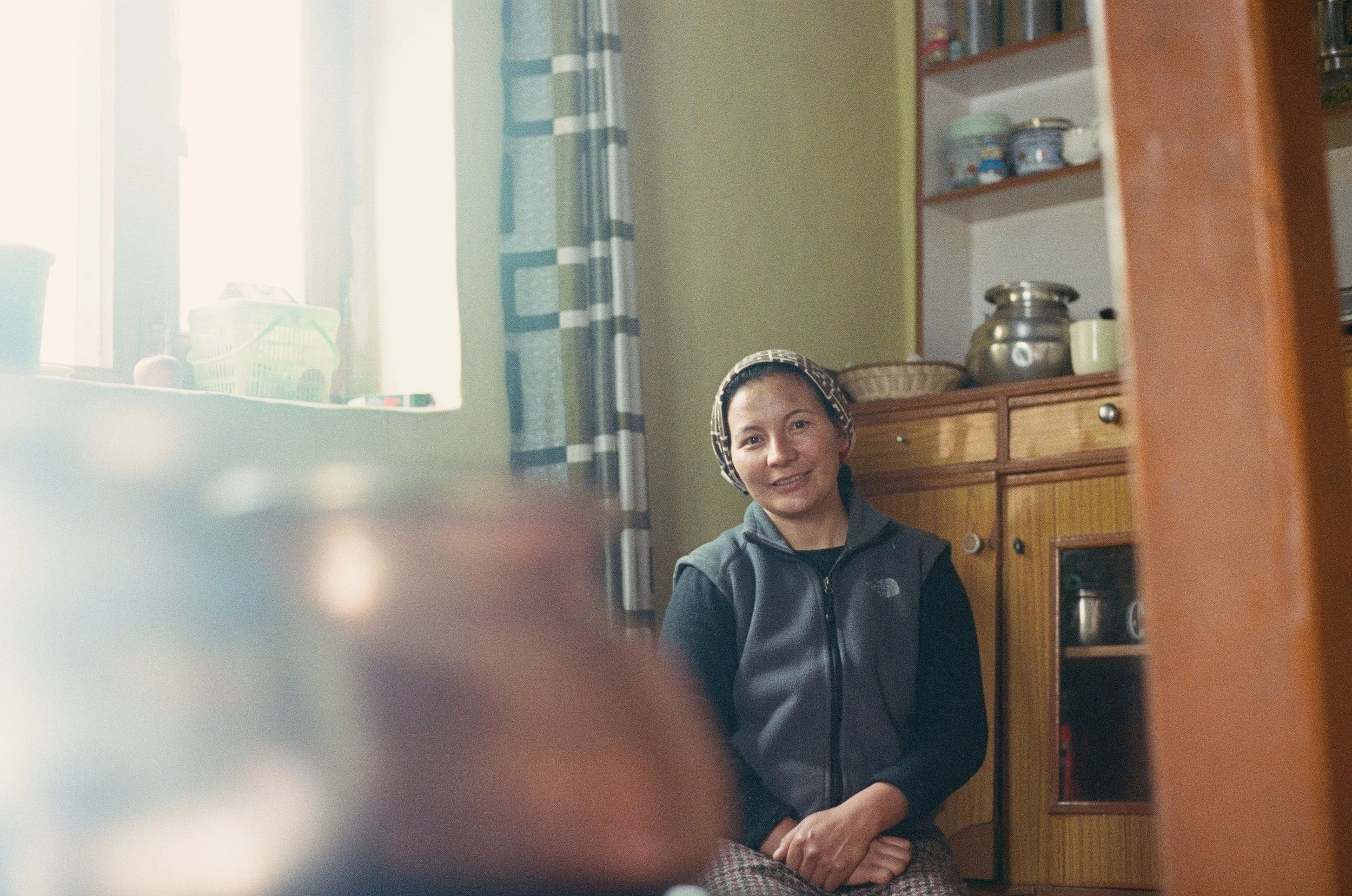
Dolma didi from Kaza village. Modern day boss babe who single-handedly raised two boys herself and runs a homestay. One of her sons enrolled as a monk in a local monastery and another was a ice hockey prodigy. We had just finished a local Tibetan/Spitian breakfast of Tsampa (barley), butter, sugar and butter tea. Dolma didi watched us attentively from the corner, by her little makeshift stove kitchen, refilling brass pots with hot water. Nothing was spoken between us, but in that moment, in the sun-lit room, everything sparkled. Dolma-didi’s face lit up beautifully in the sun.
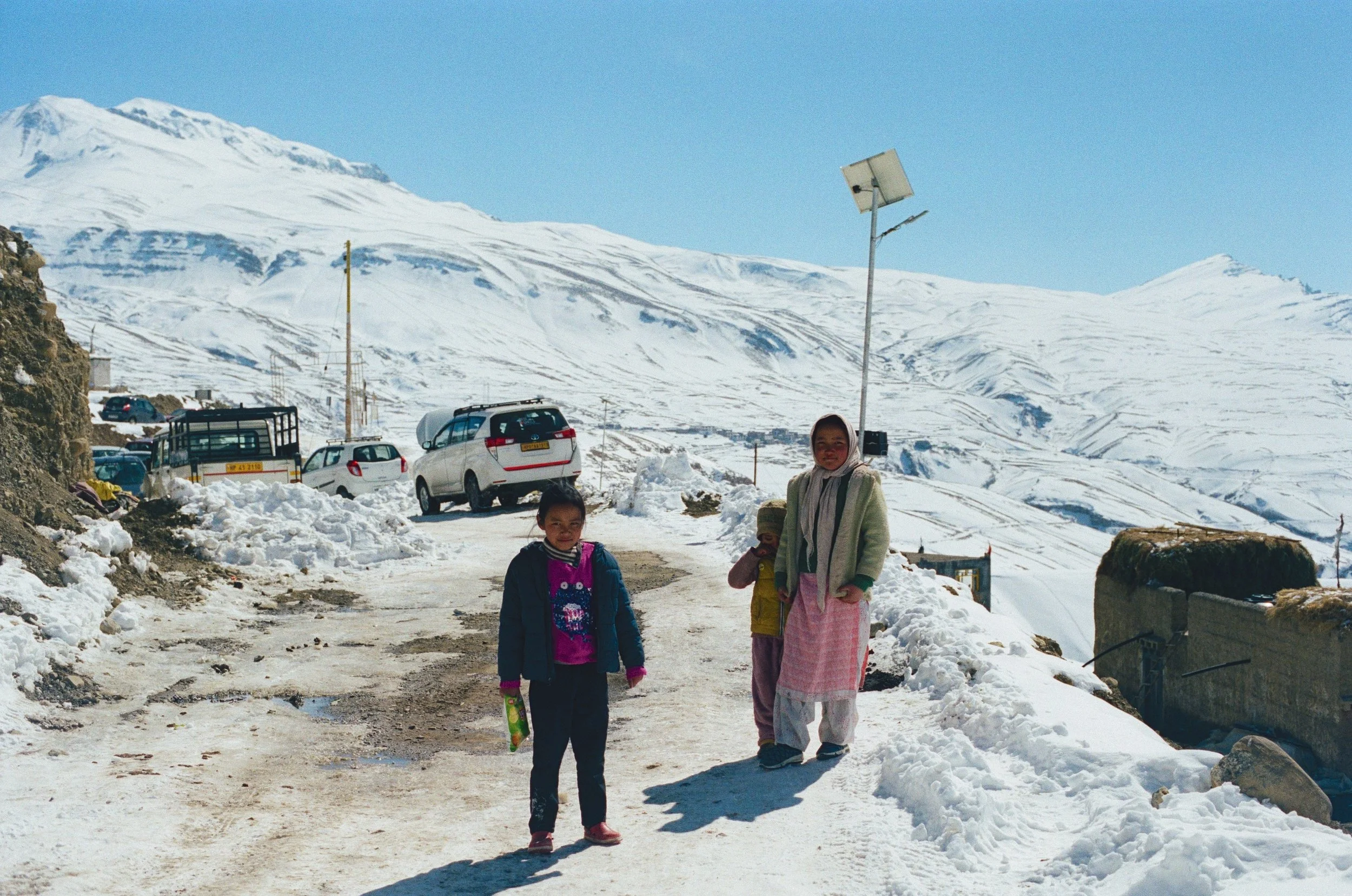
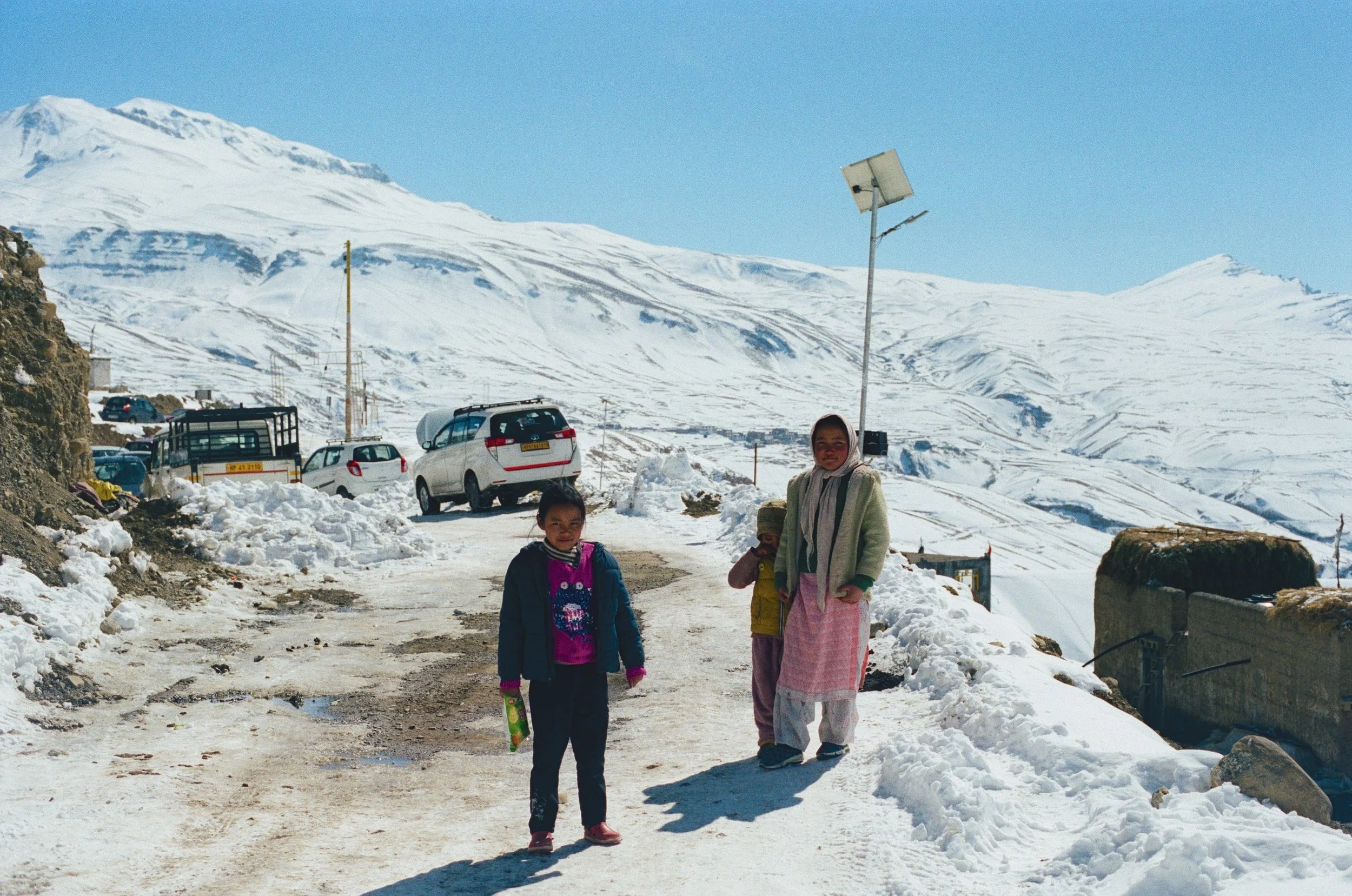
Girls at Chicham village. They were sliding around on the ice when we met each other. We gave them our bag of chips. According to Padma-ji, at the village only three things were available: chai, cigarettes and maggie. Everything else had to be brought in from the nearby town (Kaza).
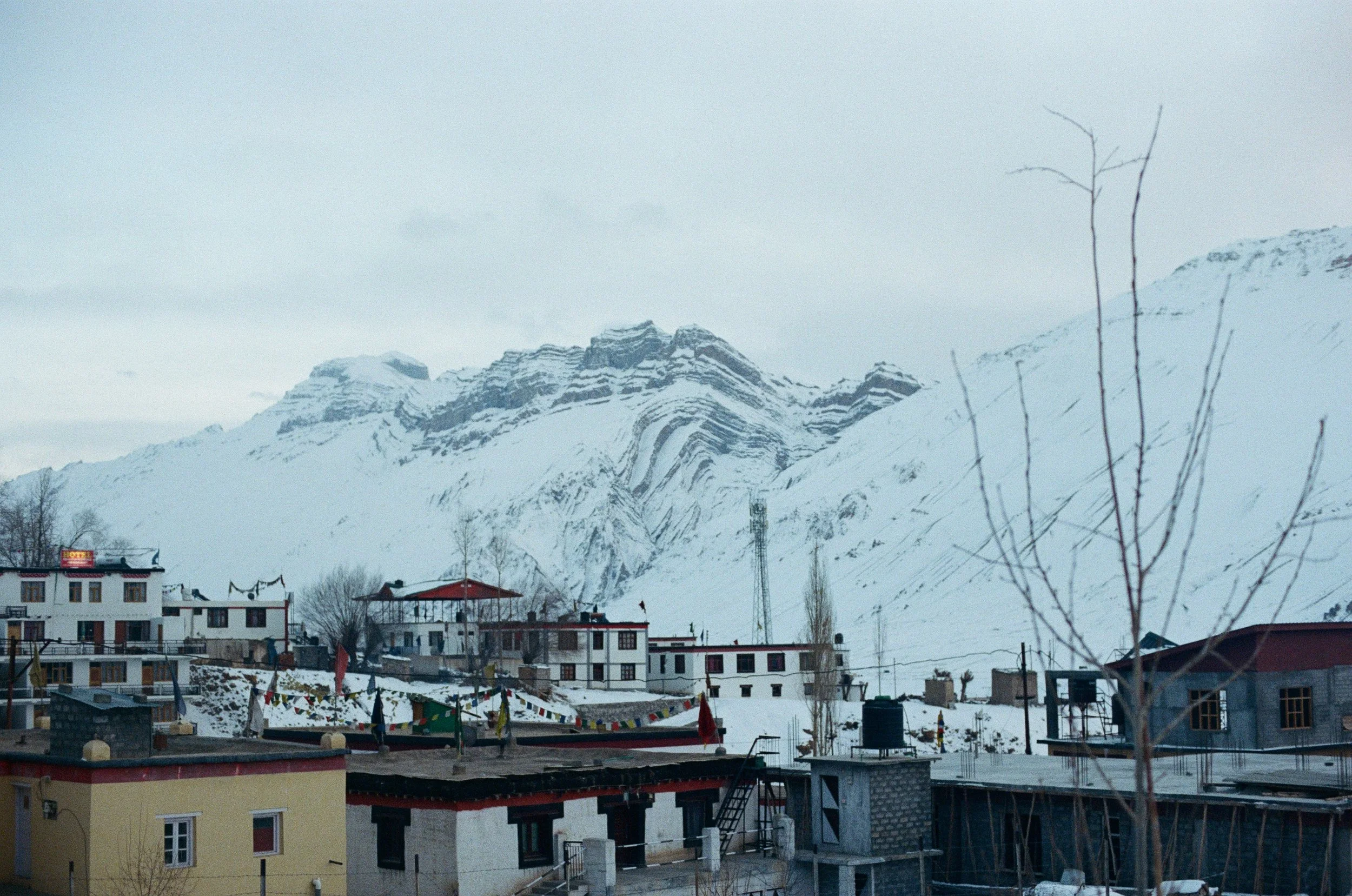
Kaza town, a 45-mins drive from Chicham on good weather and roads, which was also where the school, clinic and local shops are.
In a place like Spiti valley, where conditions are so tough, the concept of every person for themselves seems non-existent. Nature reveals the best of humanity perhaps. Could it be that having too much corrupts us, but yet having not enough makes us trapped in our own agony, unable to see past today — what's that balance then?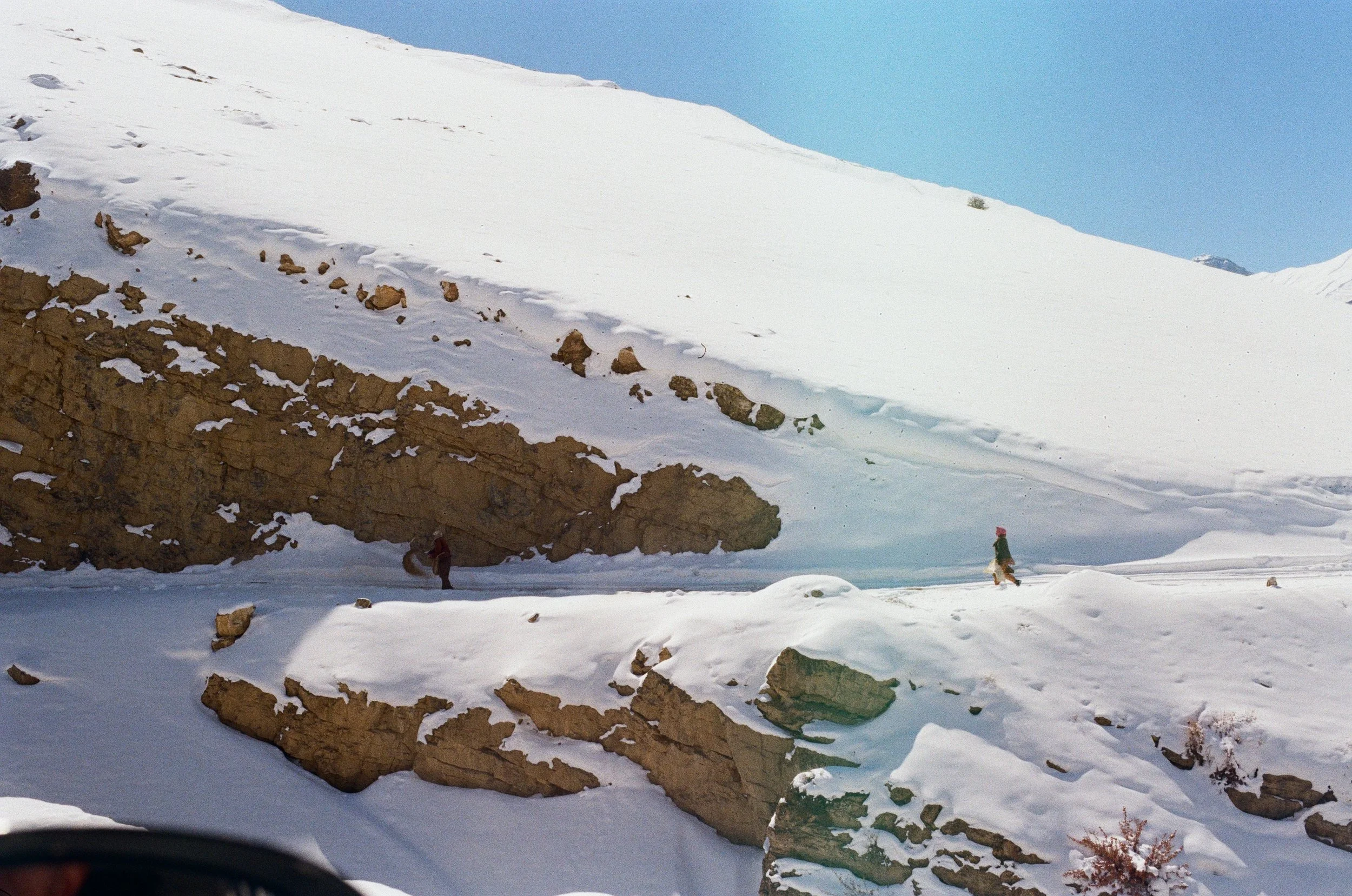
Workers from the Border Road Organisation (BRO) working tirelessly to pave and mend roads often under really harsh conditions — speeding vehicles, fumes from cement, and toddlers on their back. Deforestation to grow cash crops such as apples was prevalent, I witnessed villagers set fire to native forests to clear the land. With nothing to hold the soil together, landslides are a frequent occurence. With so much rhetoric about halting deforestation especially from the West, I wonder if that does not reek of neo-colonialism, especially if there is alternative livelihood option. Who is to deny another the chance to break the poverty circle?
At Spiti Valley, the word “Julley” is heard everywhere. It is the equivalent of “hello” “goodbye” in English and “tashi delek” in Tibetan. It is used as a greeting and farewell amongst people in Spiti valley, the connecting bridge between locals and tourists. Hobbling knee deep in snow, shovelling snow, asking strangers for direction? A super versatile word. 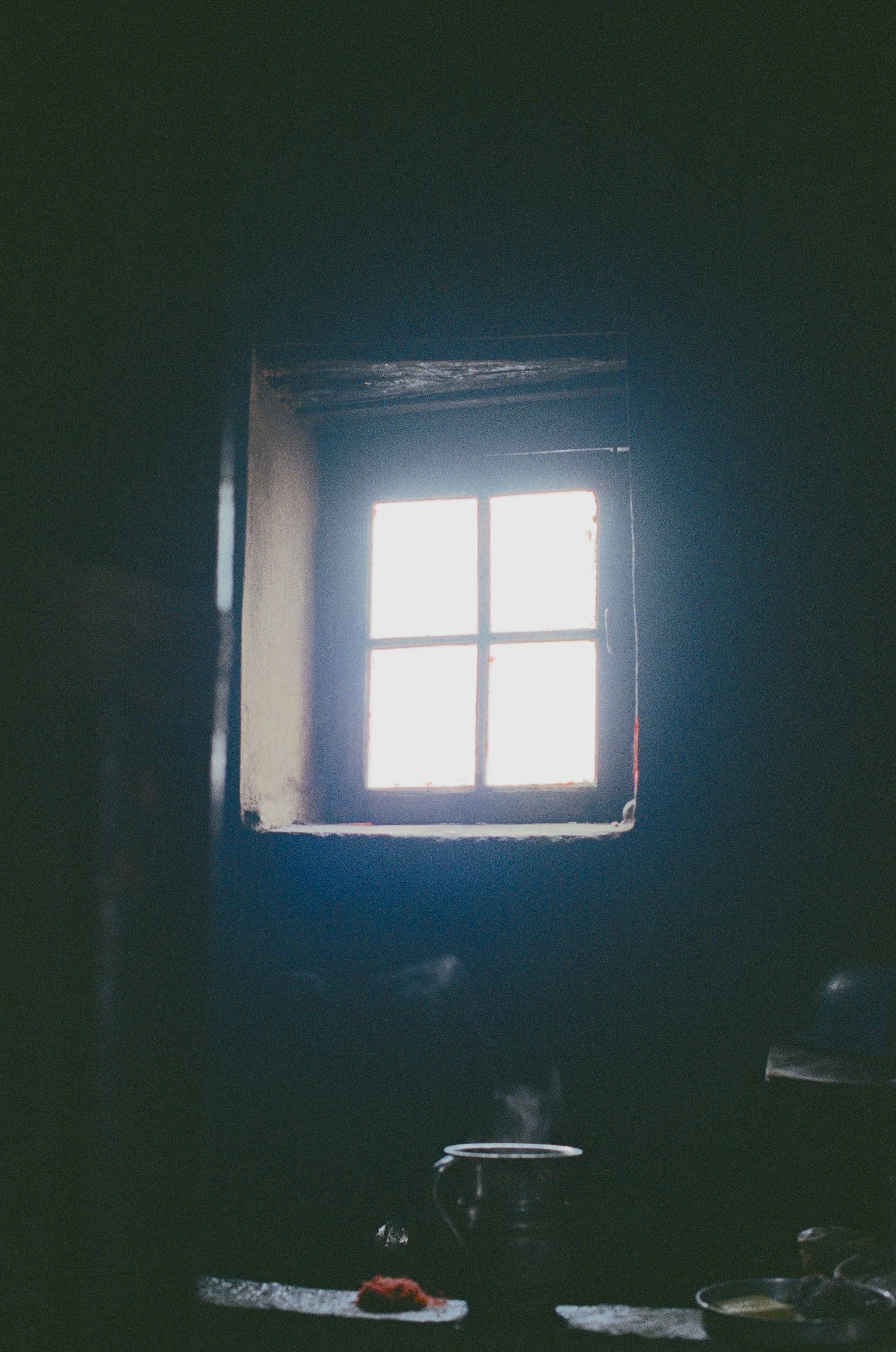
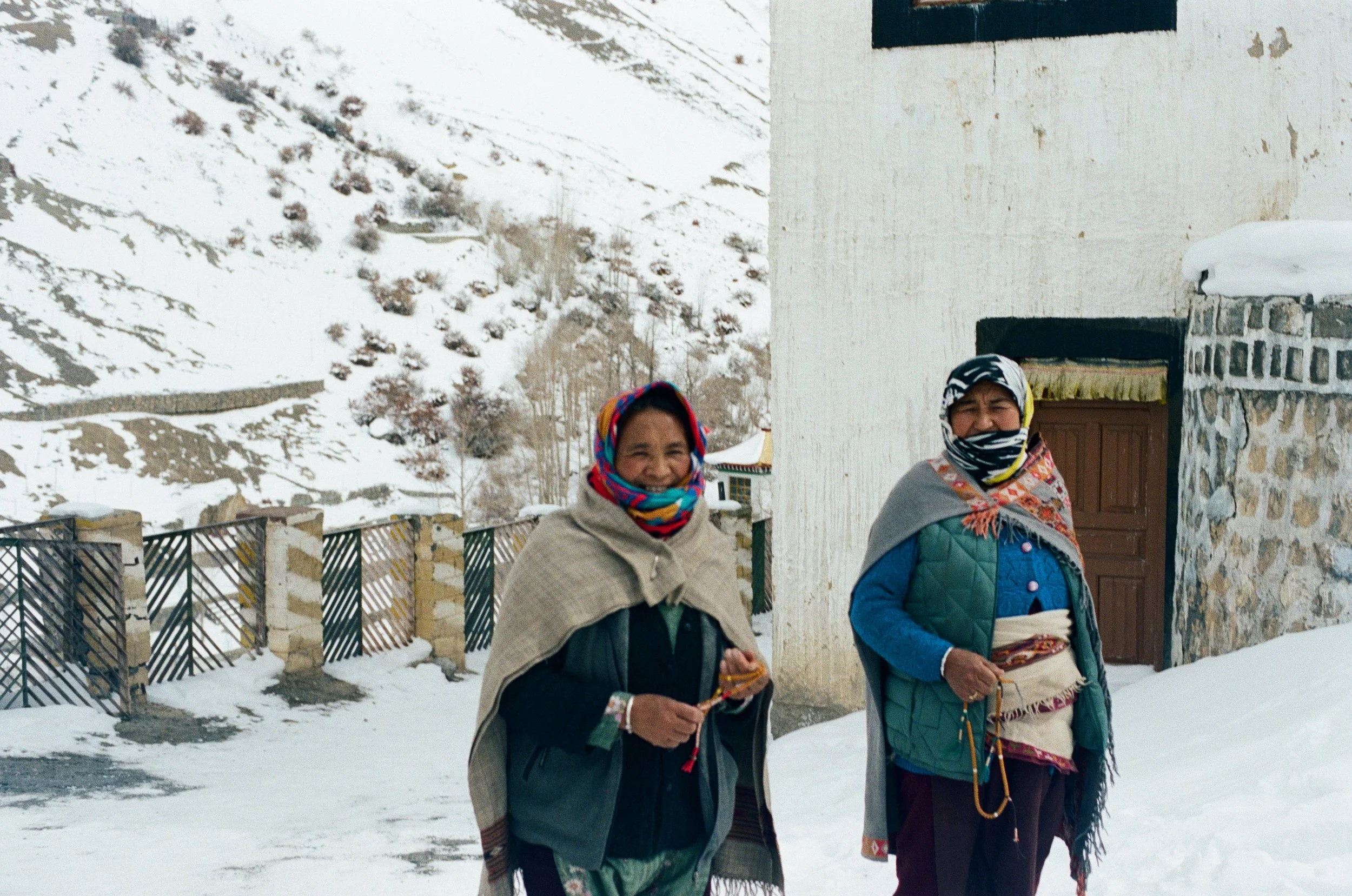
Many warm cups of chai and sea buckthorn to keep the chills and altitude sickness away — from my stool in the monastery’s kitchen. It was a moment of connection — drinking chai made by a group of kind aunties who appeared behind us, served us bread, and demanded rather insistently that we finish the last of their delicious homemade chutney. As quickly as they came, they left without us noticing either, even before we could get their names or say thank you.
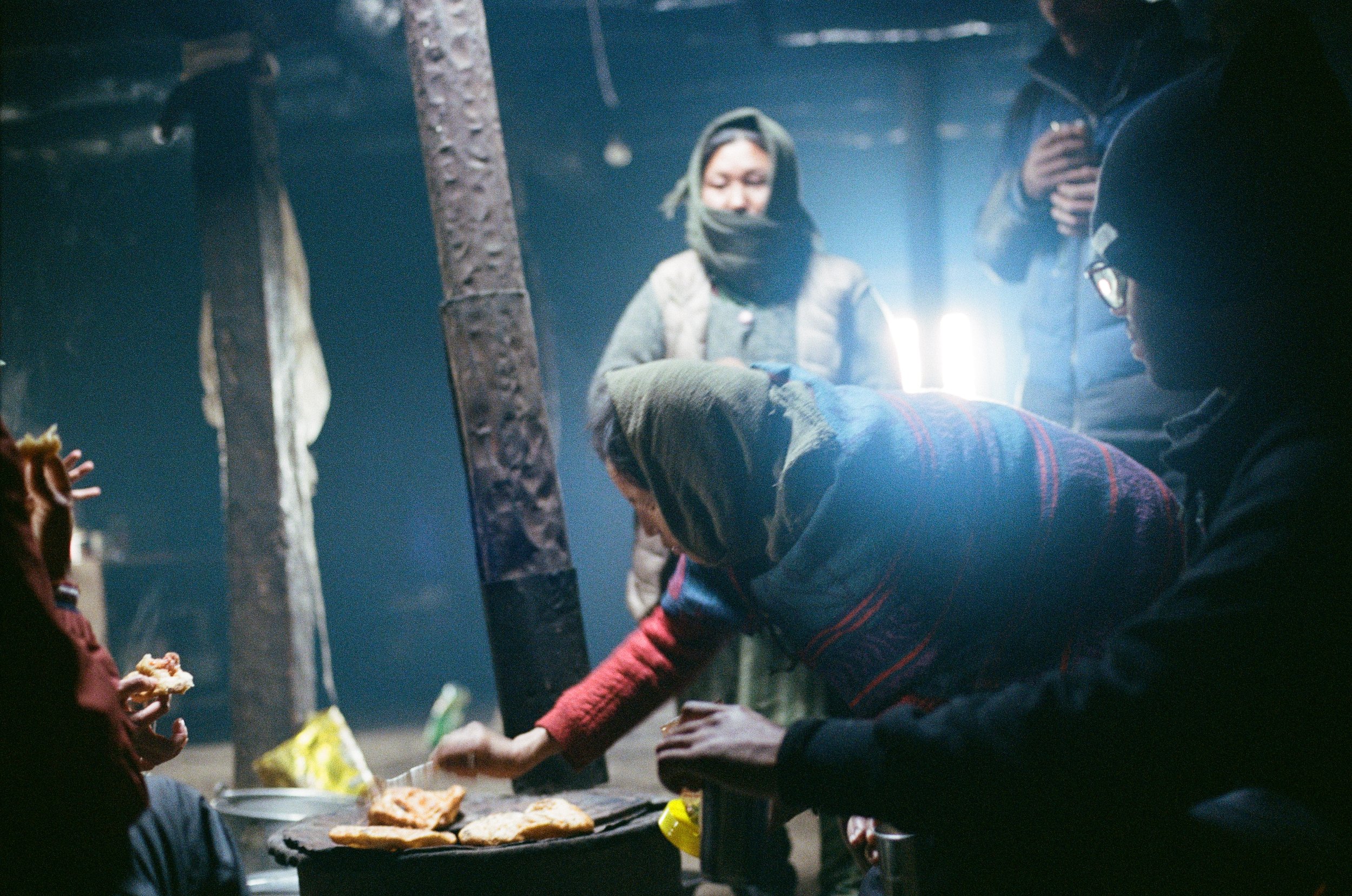
I am moved by the kindness of strangers. For example, the kitchen manager at Kee gompa below, he has got one more year of service left, before he would move on to another area of work. He spoke animatedly about having visited and worked inSingapore with one of the tibetan monasteries. We were lucky to receive butter tea because the monastery was celebrating Losar (Tibetan New Year) and butter tea was offered up to the Buddhas.
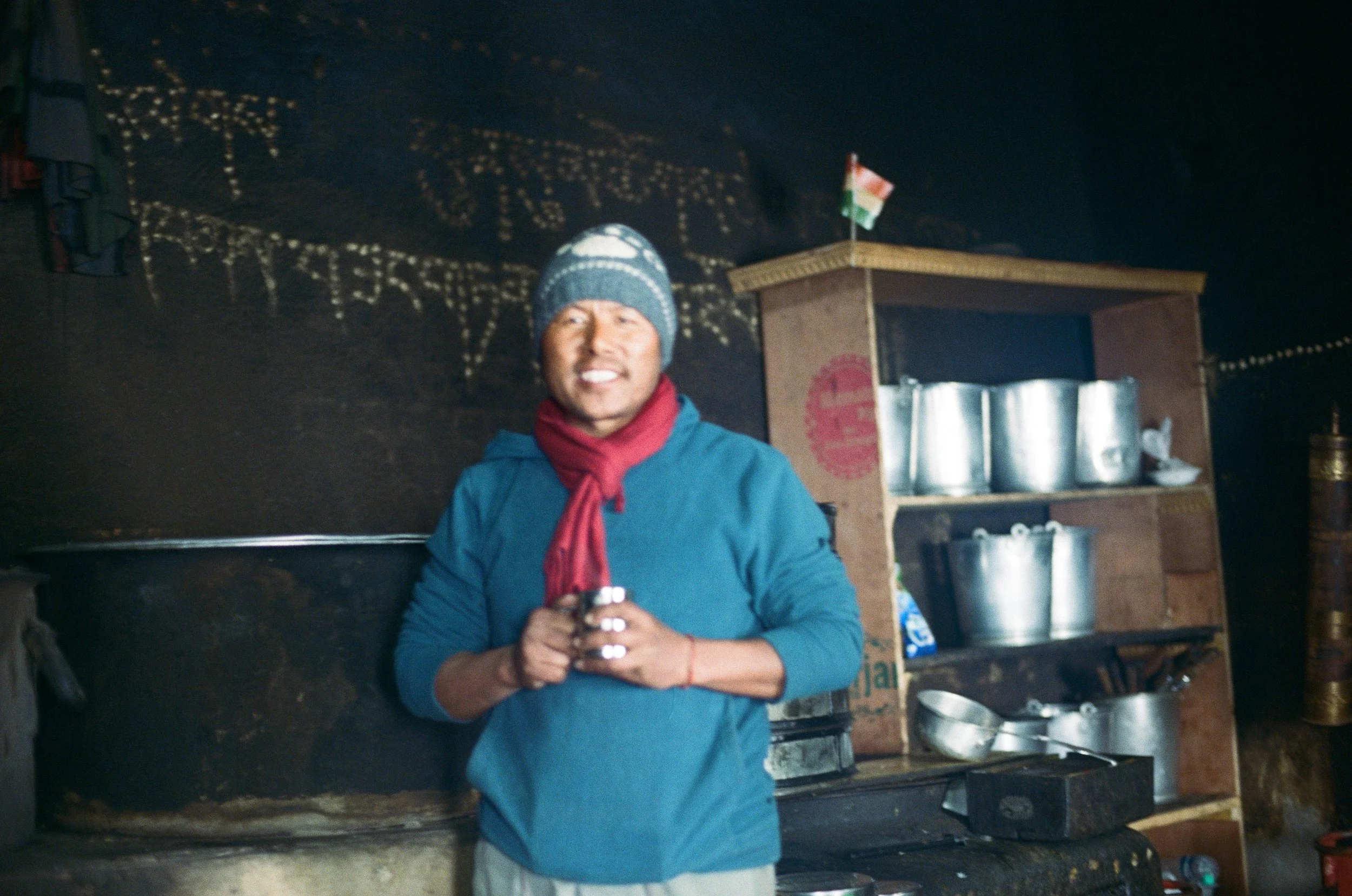
Kitchen manager standing in front of his huge cauldron of butter tea and beside metal pails where butter tea would be served to monks in the monastery.